


GHG inventory and the implementation of energy management system
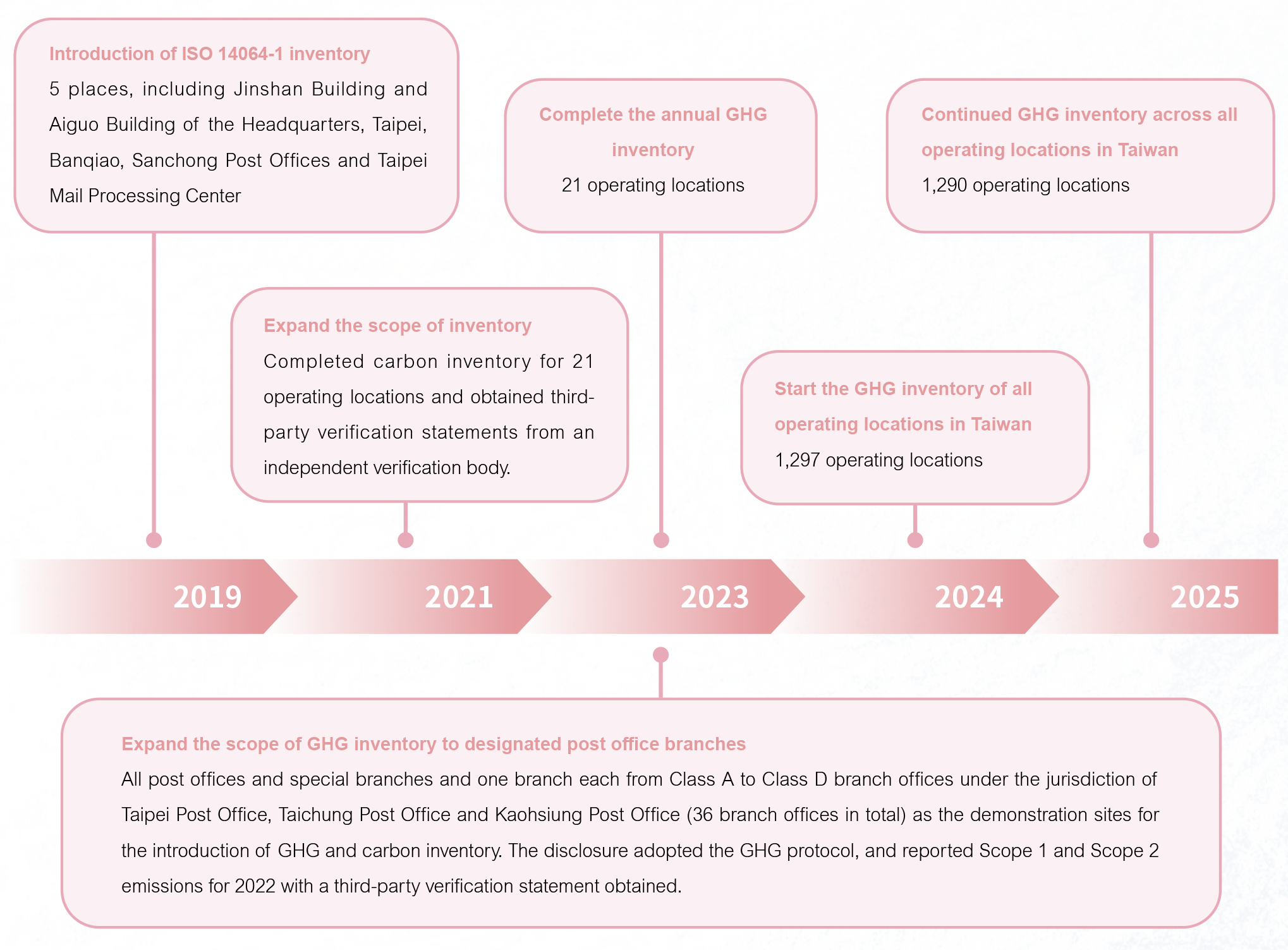
Chunghwa Post actively promotes GHG inventory. However, as the number of its operating locations is higher than that of other peers in the financial and insurance sectors, the scope of inventory work is extensive. As of December 2025, Chunghwa Post had a total of 1,290 operating locations across Taiwan, including post offices at all levels, the Headquarters, and the Taipei Mail Processing Center. To strengthen the carbon management mechanism at the organizational level and facilitate the planning and promotion of the subsequent carbon reduction action plans and phased goals, Chunghwa Post has gradually introduced GHG inventory operations since 2019, and continued to implement GHG management.
To align with international trends and cooperate with national policy and objective to step toward net-zero emissions by 2050, the GHG inventory operations at all our operating locations initiated in 2024. The inventory scope included the Jinshan and Aiguo Building of the Headquarters, Taipei Mail Processing Center, and all post office branches (some branches include administrative units), and was verified by a third party. In 2025, Chunghwa Post continued to conduct GHG inventory operations and added the inventory and emissions calculation for Scope 3 Category 4. The total GHG emissions from all operating locations across Taiwan amounted to 98,306.7205 tCO₂e, with a GHG emission intensity of 0.3812 tCO₂e/NT$ million. The results of the carbon inventory showed that the carbon dioxide generated at Chunghwa Post mainly comes from the gasoline and diesel used in the transportation and the purchased electricity of all the operating locations.
Chunghwa Post’s GHG Inventory Introduction Process
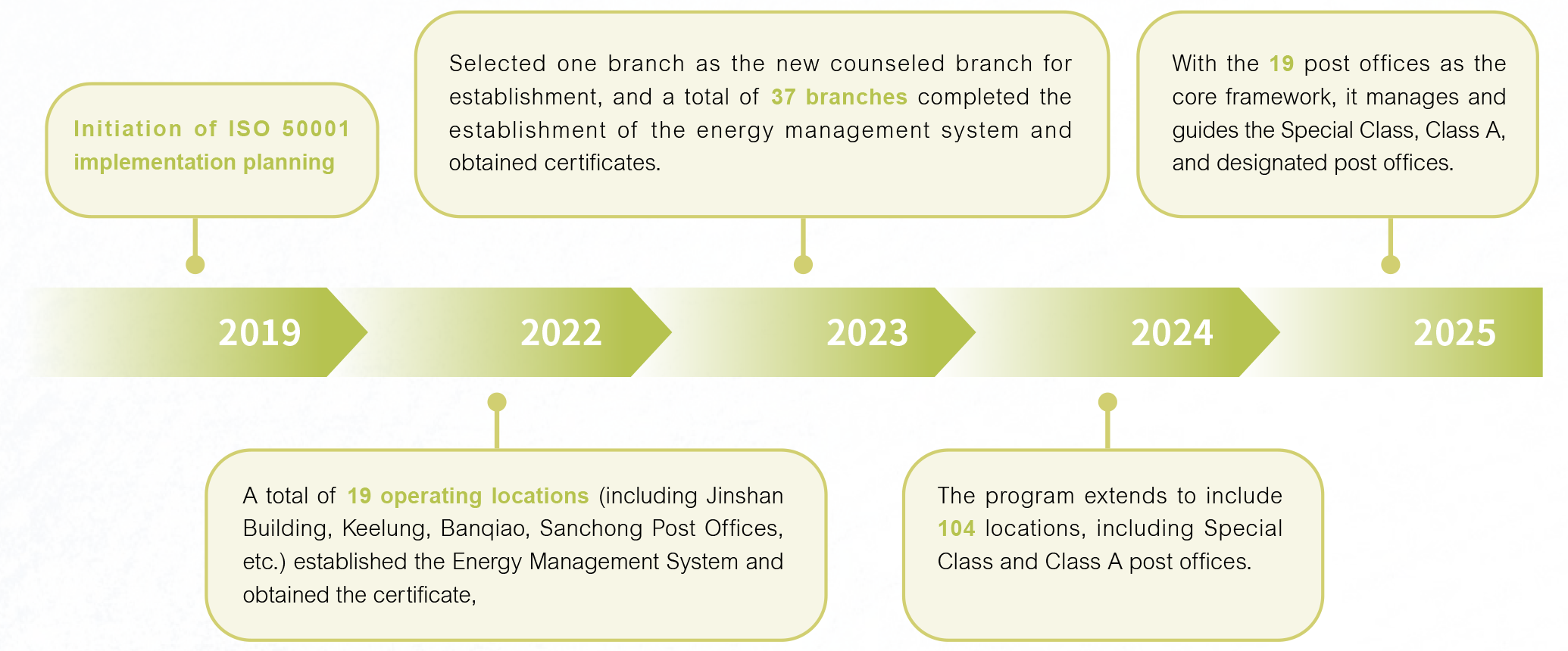
To effectively improve the energy efficiency, Chunghwa Post not only conducts GHG inventory but also implement ISO 50001:2018 Energy Management System in stages. Each office then evaluates its self-owned building. The ones in high energy consuming areas, with equipment that had not been repaired or replaced for long and were in urgent need of energy conservation improvement were prioritized as a counseled branch for establishment. In 2023, a total of 37 locations established the energy management systems and passed verification as well as obtained certificates. In 2024, guidance for the continuous improvement of the energy management system originally installed by Chunghwa Post and the post offices was conducted, and it was also expanded to include 104 special branches and Class A post offices in the operation, completed the third-party system verification and obtained the certification on January 30, 2025. The 2025 energy management system operates within the “2025-2027” timeframe. With the 19 post offices as the core framework, it manages and guides the Special Class, Class A, and designated post offices for the promotion of the energy management system. In addition to the Jinshan Building where the Headquarters is, the three major energy users, namely the Front and Rear Buildings of Aiguo Building, and Taichung Backup Center are incorporated into the scope of the energy management system. Chunghwa Post completes the third-party verification and obtains ISO 50001 certification every year, and will continue to improve energy performance, strengthen green competitiveness, and facilitate environmental sustainability.
Timeline of Chunghwa Post’s Energy Management System Implementation
Energy-Saving Actions at Operating Sites
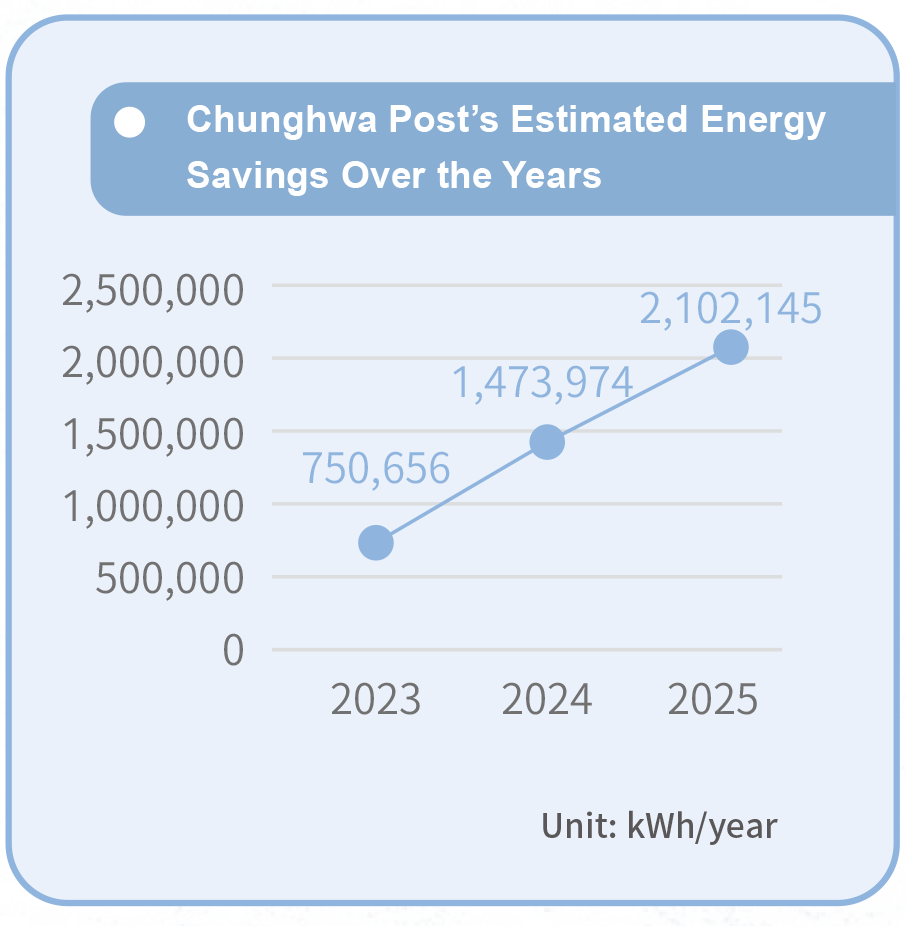
For the 21 operating locations with relatively high electricity consumption, the main job is to implement the replacement of lighting equipment and air-conditioning systems in 2025. The total estimated energy saved reached 2,102,145 kWh/year, equivalent to 7,567.72 GJ. The GHG equivalent reduction is approximately 996,416.26 kgCO2e (based on the 2024 electricity carbon emission coefficient announced by the Energy Administration, Ministry of Economic Affairs).
Chunghwa Post’s Estimated Energy Savings Over the Years
At the same time, Chunghwa Post is also devoted to various green innovation services, which not only enhance our customers’ awareness of energy conservation and carbon reduction, but also reduce operating costs and improve the competitiveness in sustainability issues. We can further practice green living in daily lives, actively respond to various indicators of green office, and jointly conserve energy and resources by implementing paperless and green procurement measures, creating an eco-friendly working space and motivating our employees to work in a green office. As of 2025, a total of 230 post offices have responded to Ministry of Environment’s Net-Zero Green Life- Responding to Green Office Campaign.
Chunghwa Post’s Responses to Green Office Indicators and Measures

Carbon Reduction in Transport
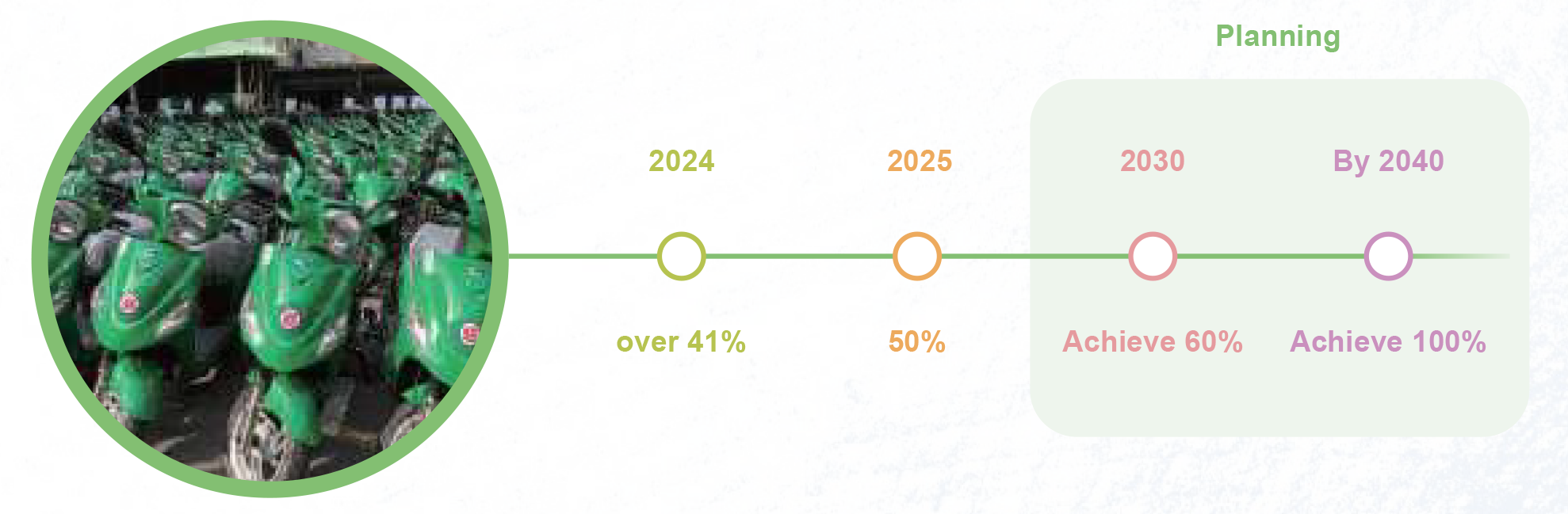
In response to the green energy policy, Chunghwa Post has implemented a policy to promote the use of electric scooters and e-vans since 2017. The number of vehicles purchased and the quotas allocated to each unit depend on factors such as the number of delivery sections of each post office, the age of existing vehicles, mileage, and the annual budgets. However, as the current transport capacity of electric vehicles (EVs) cannot fully replace that of traditional fuel-powered ones yet, a full-scale replacement has not been carried out. In the future, we will continue to improve the overall energy efficiency through continuous improvement of the transportation operation process. Meanwhile, attention to the development of vehicle-related technology is also paid for a timely replacement with new ones to meet the postal business demands while taking into account energy conservation and carbon reduction.
Percentage of Electric Scooters among Postal Scooters
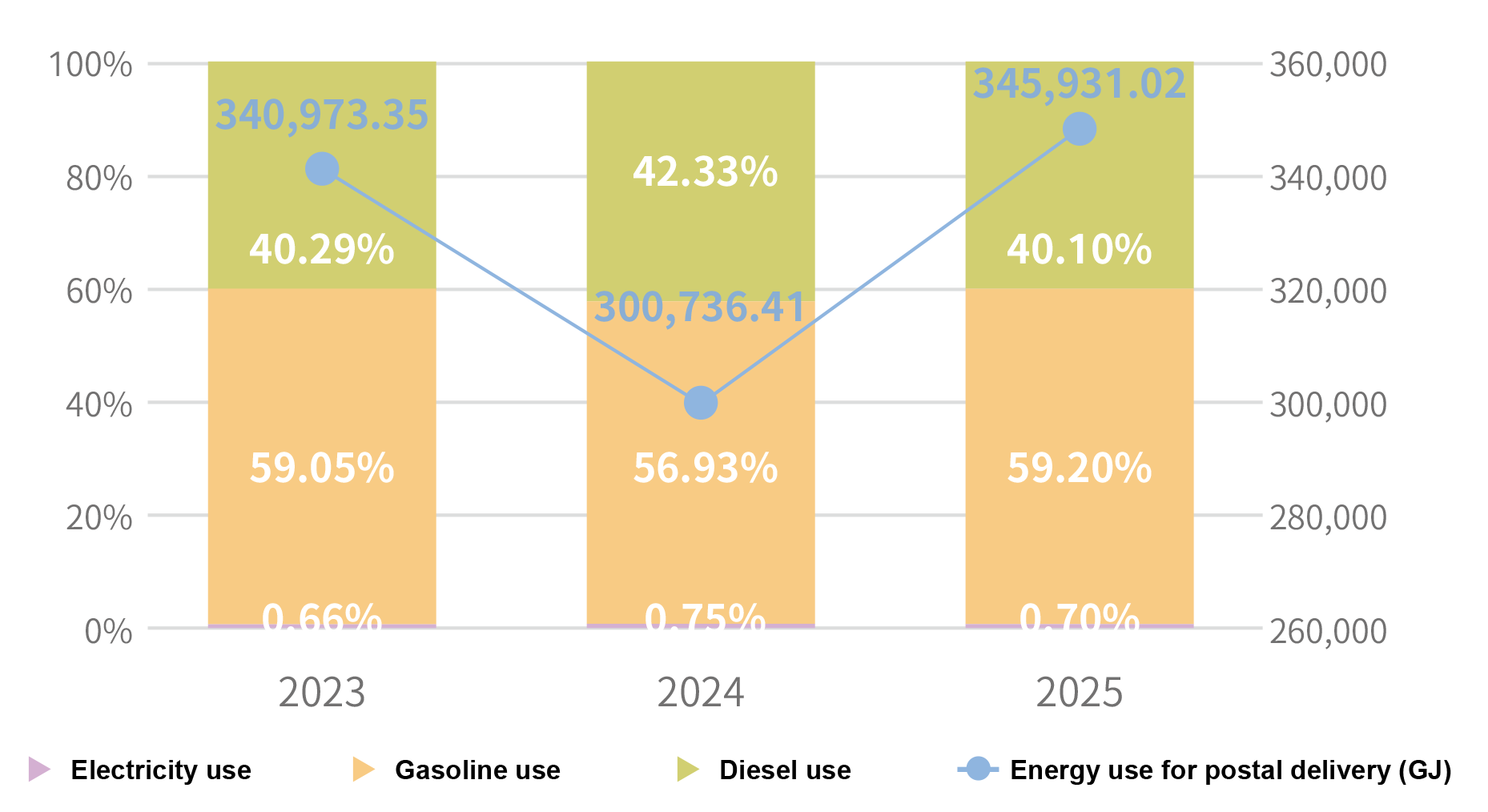
To improve the efficiency of postal delivery, the number of vehicles used has continued to increase in recent years. In 2025, with the use of electric vehicles and the continuous promotion of carbon reduction measures in transport, energy consumption increased by 15.03% compared with 2024. This was due to the increase in e-commerce express mail, which in turn increased the number of transportation and delivery trips, resulting in higher energy consumption (fuel) for postal services.
Energy use for postal delivery
Reduction of Resource Consumption
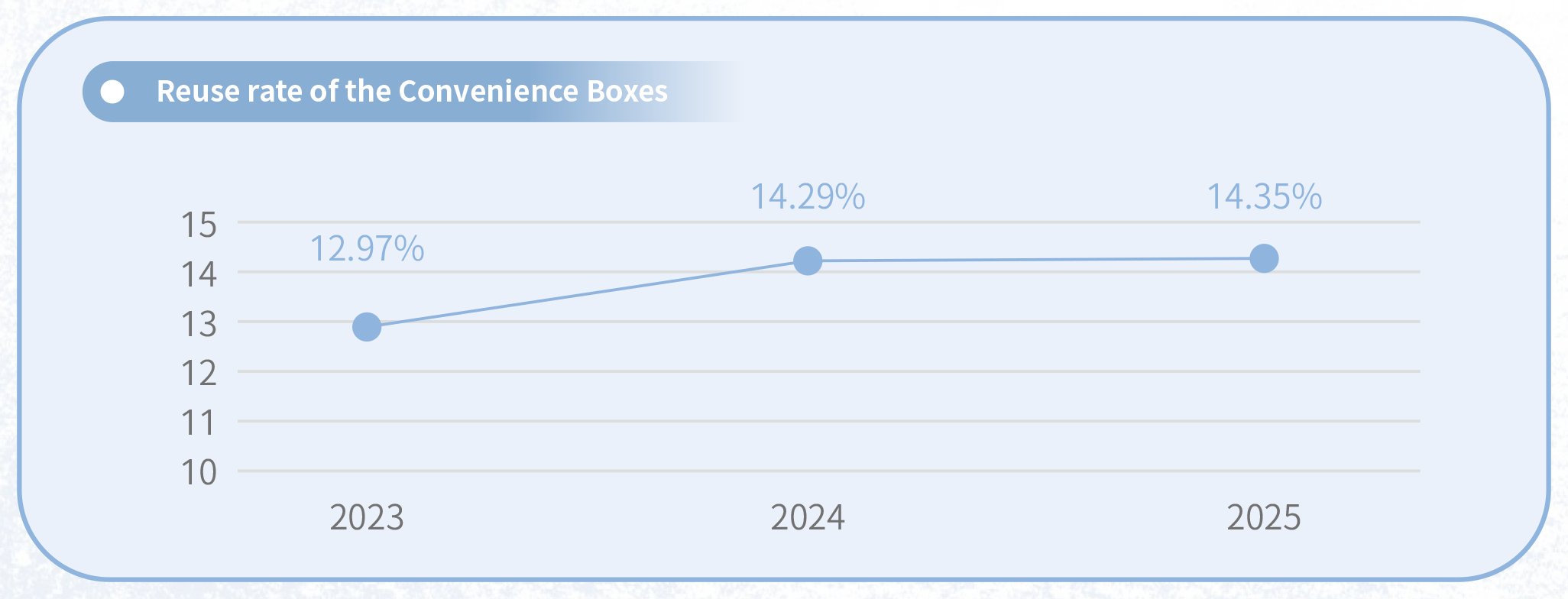
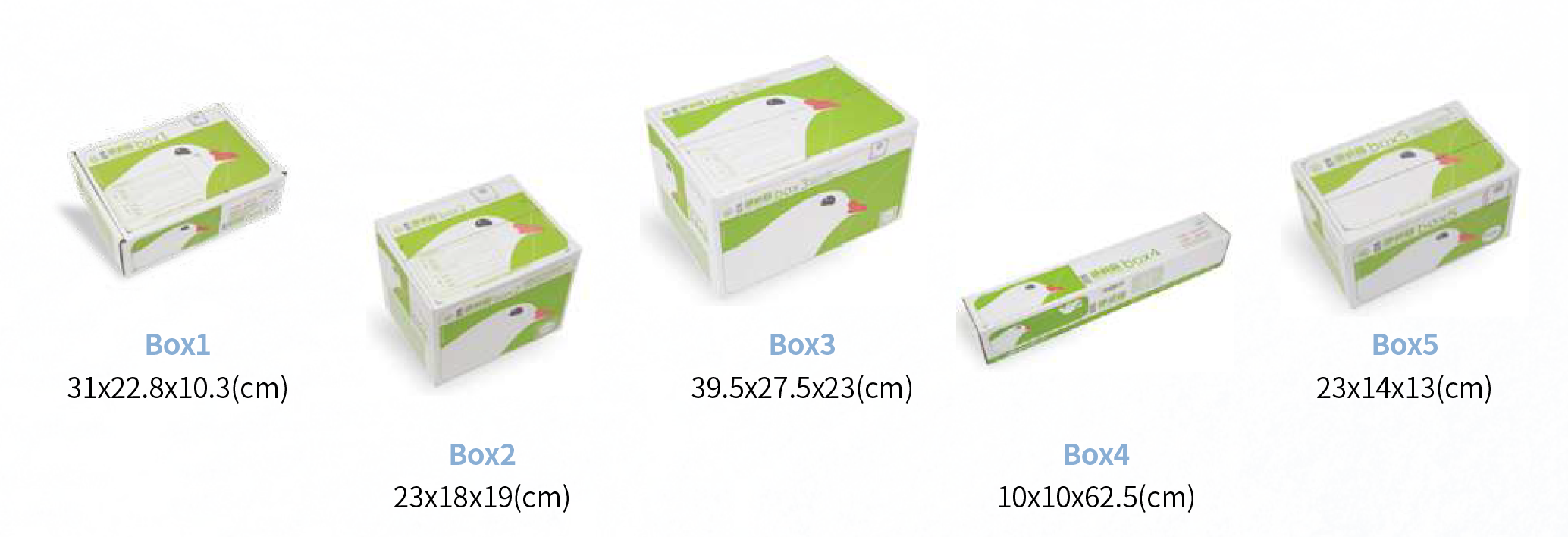
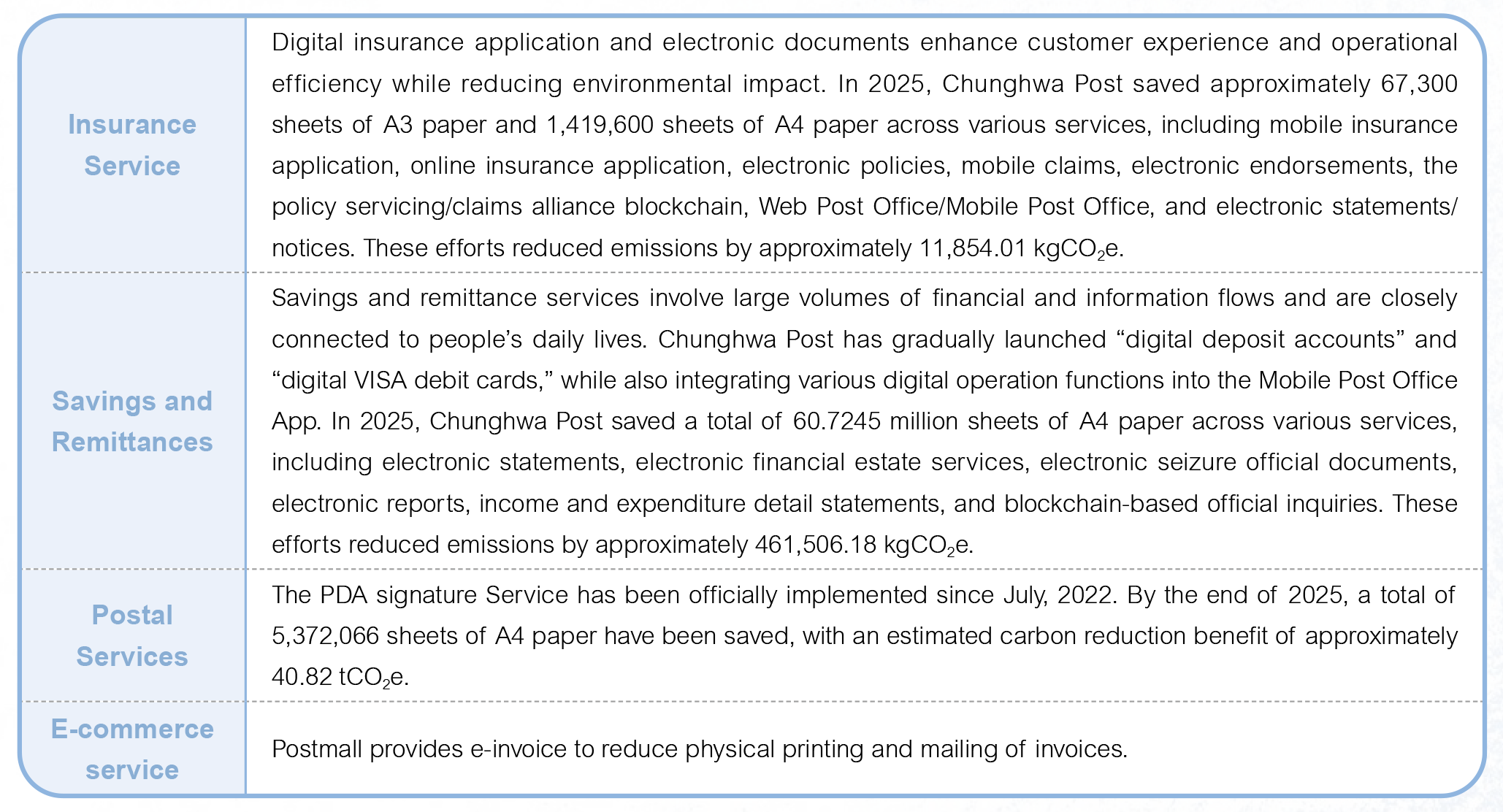
The traditional postal, saving and life insurance business processes all require documents and receipts. To reduce the consumption of paper, digital services are provided to replace physical paper consumption, reducing consumption of paper while lowering labor costs and customer wait time, improving operational efficiency and service quality. In addition, to encourage resource recycling, customers reusing postal convenience boxes will continue to be provided with postage discounts. In 2025, 3,728,669 convenience boxes were sold, and 624,669 were recycled, with the reuse rate of 14.35%.
Note: Reuse rate (%) = Number of boxes reused/ (number of boxes used for the first time + the number of reused boxes).
Reuse rate of the Convenience Boxes
Digitalization-Driven Carbon Reduction Benefits
Water Use and Water Conservation Measures
Water use at Chunghwa Post is mainly for daily use in the offices, and the source is all from the tap water, which would not cause a major impact on the water intake. The total water consumption in 2025 totaled 567,486 million liters.
Water Consumption statistics at operating locations

Low-carbon Facilities
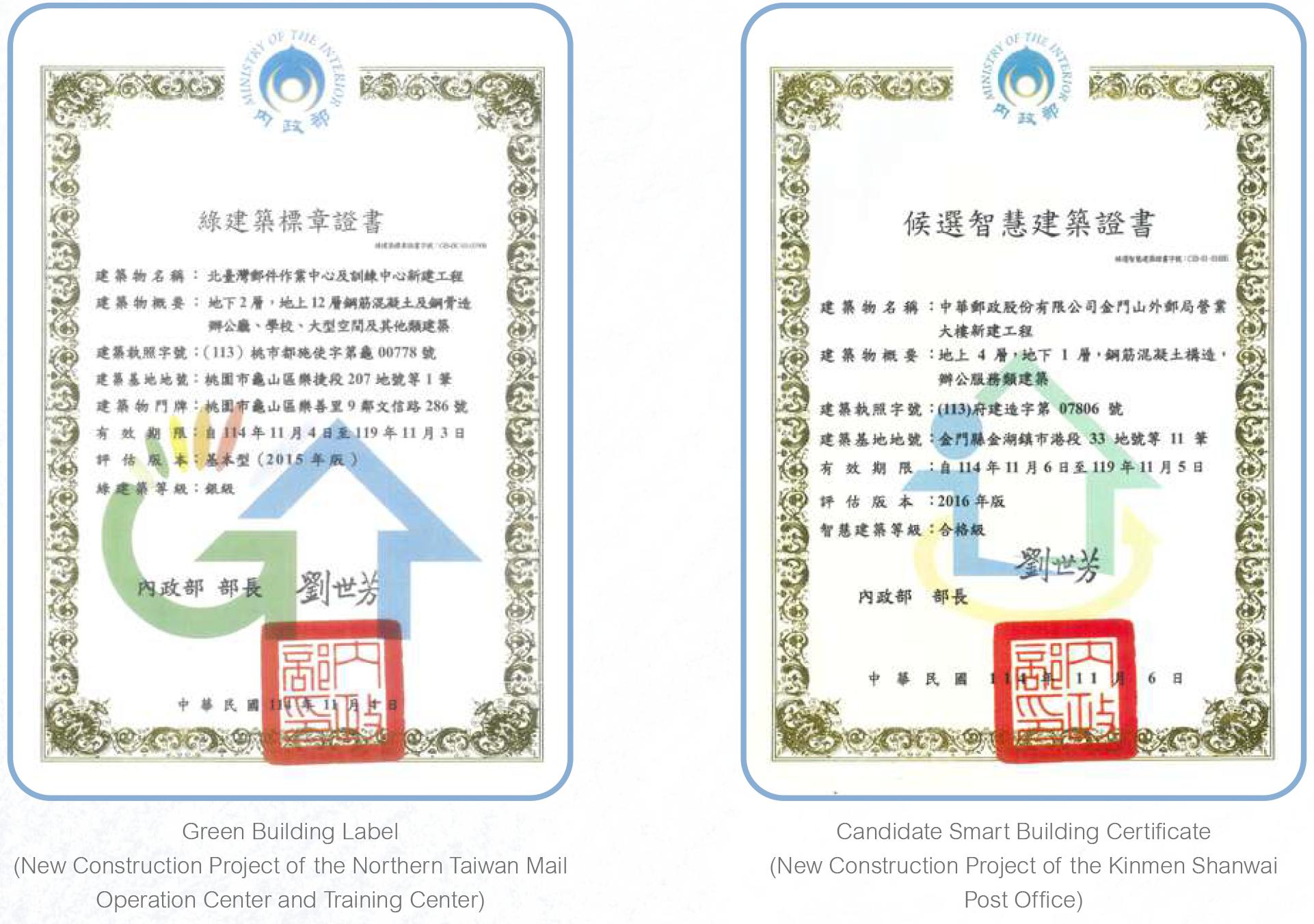
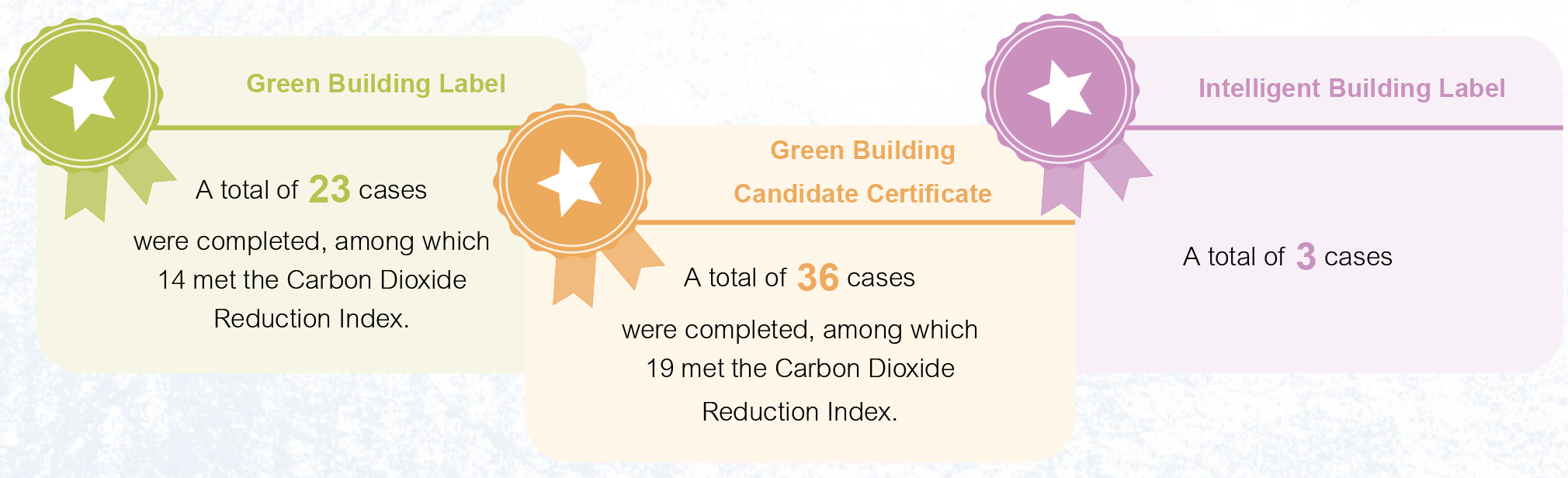
To actively respond to the green building promotion policy, none of the development projects are located within environmentally sensitive areas. Low-carbon designs are incorporated in the renovation and refurbishment of existing buildings, with the goal that all future construction projects will comply with daily energy-saving and water resource performance standards. In 2025, one new Green Building Label (the New Construction Project of the Northern Taiwan Mail Operation Center and Training Center) and one Candidate Smart Building Certificate (New Construction Project of the Kinmen Shanwai Post Office) were obtained.
Green Building Label and Candidate Smart Building Certificate
Cumulative Smart Green Building Certifications Obtained as of 2025
Smart Energy-saving and Environmentally-friendly Park
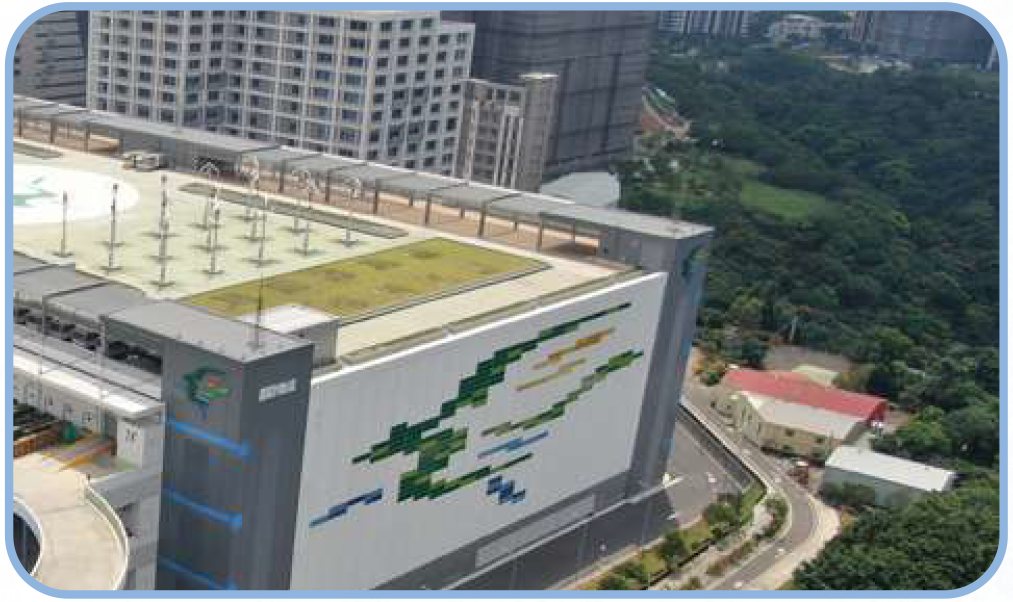
The Postal Logistics Park has been the major construction of Chunghwa Post in recent years. By incorporating human-centered and sustainability-oriented thinking into the design, this Park makes full use of renewable energy, such as wind and solar energy. Multi-functional intelligence management systems with the functions of safety monitoring, traffic guidance, parking management, personnel control, intelligent lighting and intelligent conference rooms are planned. The comprehensive use of smart sensing network control and high-efficiency electromechanical integration technology can effectively improve the quality and functionality of building use, realizing a smart green building that integrates sustainability, energy conservation, and humanity, and the energy saving potential of the buildings is estimated to reach over 30%. In addition, the functions and life of the buildings in the park are improved based on the Building Information Modeling (BIM), please refer to Section 2.2.1 Enhancing Delivery Efficiency.
Chunghwa Post’s Postal Logistics Center in the Logistics Park
Installation of Solar PV System
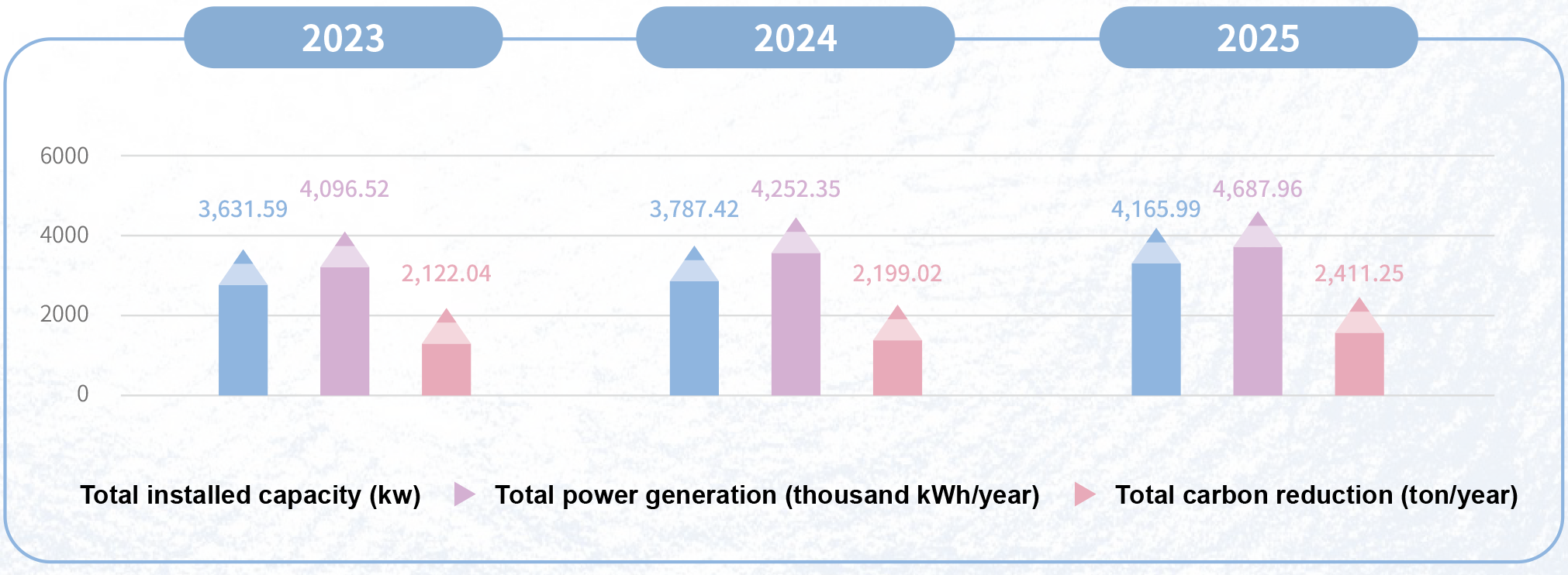
Since 2015, Chunghwa Post has successively installed solar PV power generation systems on the roofs of the buildings of its post offices and sold the electricity generated back to Taiwan Power Company. As of the end of 2025, Chunghwa Post installed solar PV power generation system with the total capacity of 4,165.99kW, and will continue to inventory idle rooftop space to further increase the proportion of renewable energy use.